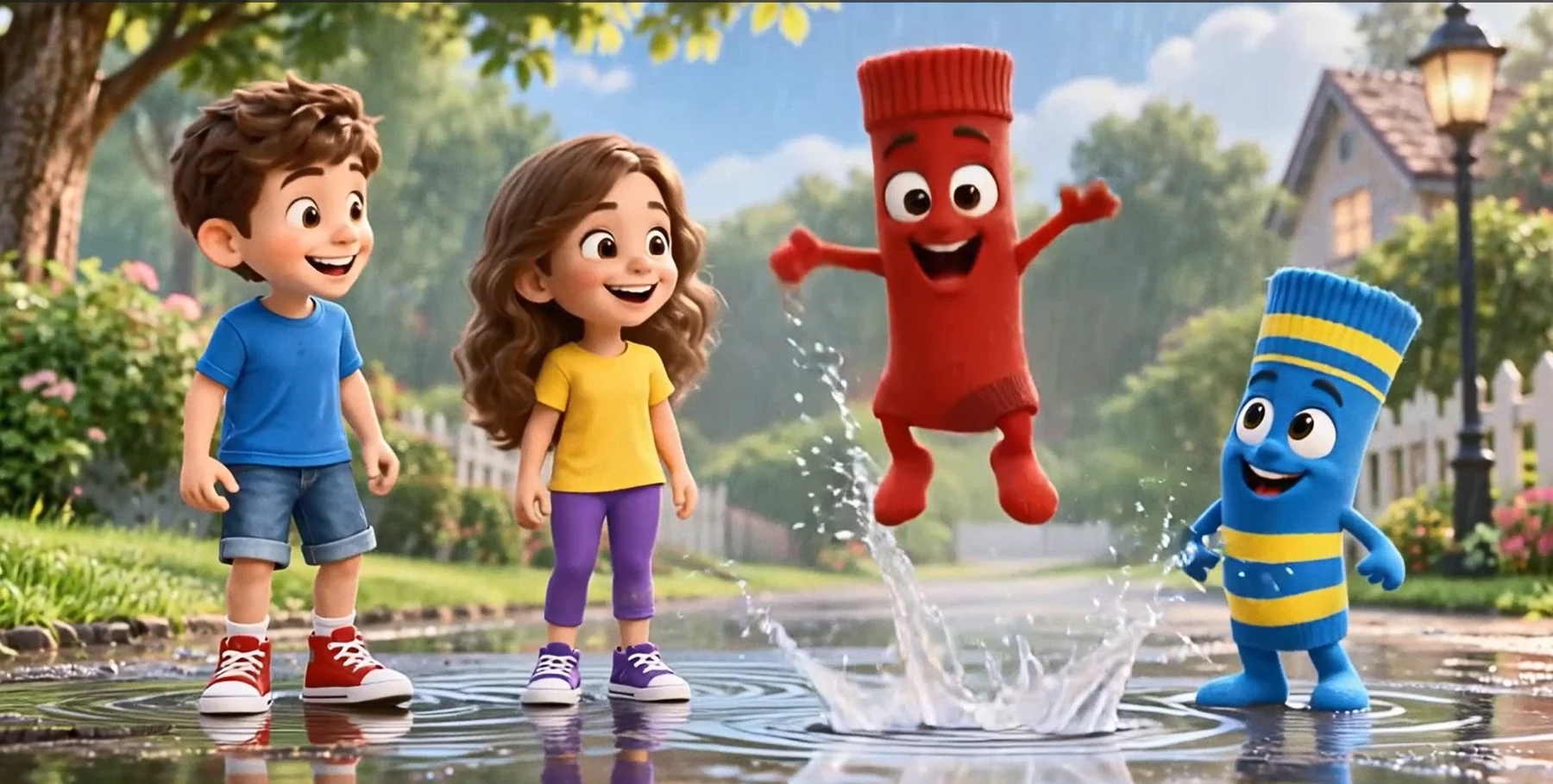
I wrote and produced Silly Socks, an original animated nursery rhyme, from the first idea to a finished video.
The subject was deliberately light-hearted. The experiment behind it was more serious: how quickly could one person combine creative direction, music and animation into something complete using accessible AI tools?
The first route was not the fastest
I began in Blender. It is extraordinarily capable, but I quickly realised that learning a full 3D animation workflow was becoming the project rather than helping me finish the project.
I changed approach and used Seedance through OpenRouter. That decision moved the work forward much faster and allowed me to concentrate on the characters, scenes, rhythm and overall experience instead of the mechanics of animation.
Changing tools midway was not wasted effort. The early attempt clarified what I actually needed from the production process.
What the numbers showed
The finished project took roughly 10 hours of my time and about €4 in direct production cost. It combined tasks that would traditionally sit across several specialist roles, including writing, music, visual development, animation and editing.
That does not mean AI removes the need for creative skill. It changes where the work happens. Producing an initial scene became fast. Deciding whether the characters were consistent, the movement felt natural and the video held together still required repeated human choices.
Three lessons from Silly Socks
1. Pick the right tool, not the familiar route
Staying with the original plan would have consumed most of the available effort. Reframing the problem and switching tools made the finished result possible.
2. Speed is no longer the main bottleneck
AI can generate options almost instantly. The constraint moves to judgement: knowing what works, what feels wrong and when another iteration will genuinely improve the result.
3. Small experiments beat large upfront plans
I did not need a complete production system before starting. I needed a clear outcome, a quick way to test the next step and a willingness to change direction when the evidence suggested a better route.
Why this matters beyond a nursery rhyme
The same pattern appears in operational change. A small working experiment exposes assumptions faster than a large plan. It shows where the real constraints are and gives people something tangible to evaluate.
Silly Socks is not a corporate transformation programme, and it should not pretend to be one. But the habit behind it is transferable: start with an outcome, test quickly, learn from what does not work and change the route before sunk effort becomes an excuse to continue.